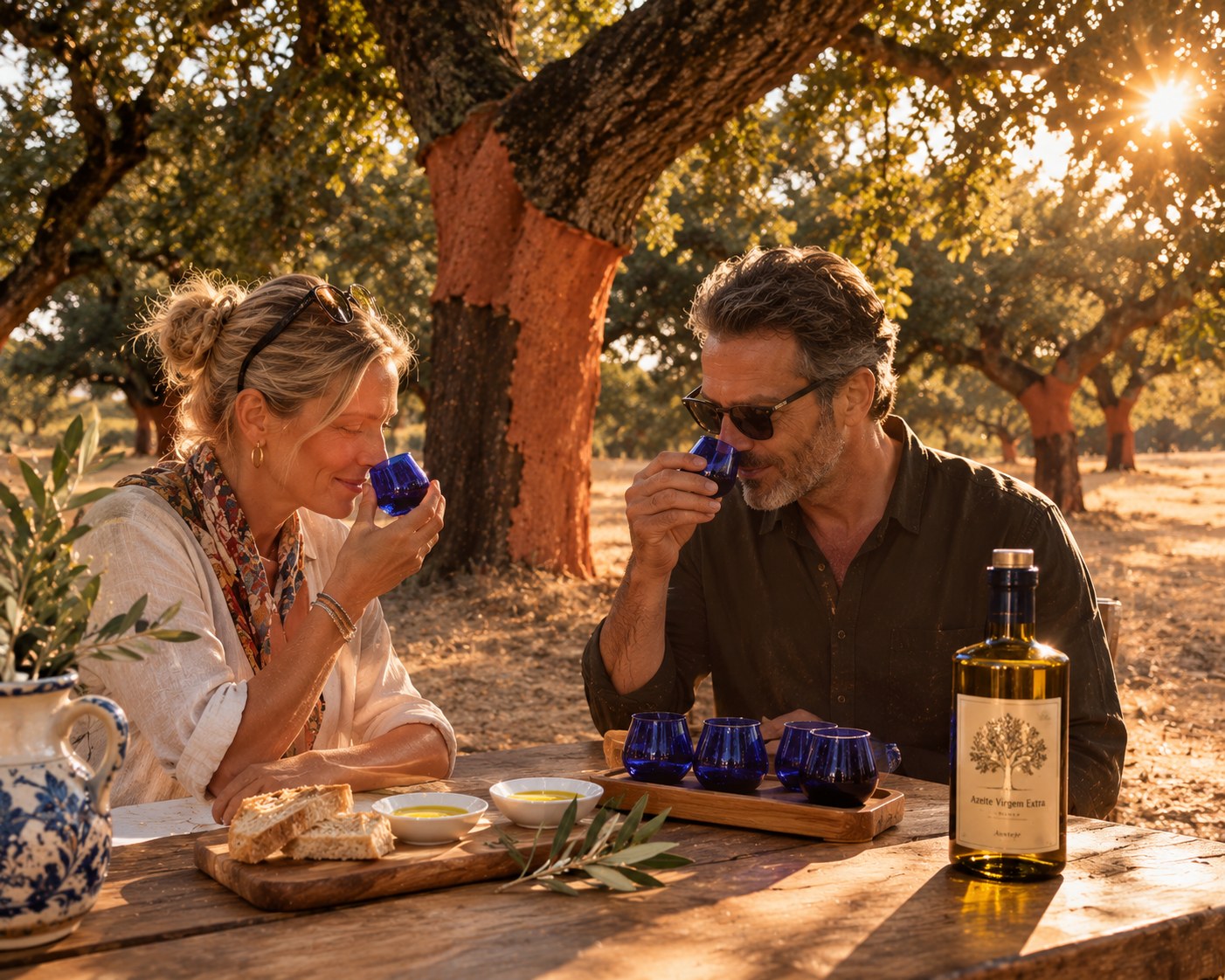
Alentejo wine belongs to a landscape of changing textures. Granite hills rise in the north. Around Borba, marble shapes the towns. Farther south, olive groves spread across open plains. A glass may suggest the region’s warmth, but the countryside behind it is far from uniform.
The eight wine sub-regions offer a useful way to understand those differences without turning a journey into a checklist. Begin with their names and settings, then leave room for the cellar itself: the grapes a family grows, the methods it keeps and the food it puts beside the wine. Geography provides a starting point, rather than a promise of how every bottle will taste.
Understanding the wine map
The official Alentejo wine region contains eight sub-regions: Portalegre, Borba, Évora, Redondo, Reguengos, Vidigueira, Granja-Amareleja and Moura. These are wine-growing areas, not simply town names or interchangeable descriptions of the wider countryside. Familiar names on a label can therefore help orient a visit, but they should not be read as a complete guide to the wine.
For travel, a broader map is useful. Alto Alentejo describes the northern landscape of granite hills, castles and mountain woods. Alentejo Central brings together Évora, the marble towns and cork oak countryside. Baixo Alentejo opens onto southern plains, olive groves and towns such as Moura and Vidigueira. These travel regions and the wine sub-regions serve different purposes; their names are not equivalent.
Use the wine map to choose where to explore, then let a family cellar tasting bring the place into focus. Walking the vines, seeing the cellar and tasting with bread, cheese and cured meats gives the names a tangible meaning. Ask which grapes are grown there and how the wines are made.
Portalegre and Borba: granite hills and marble country
Portalegre lies beside the Serra de São Mamede, in the greener northern Alentejo. Granite hills and chestnut woods distinguish this setting from the open plains farther south. Summer is warm, but the mountains remain cooler than the plains. That contrast is a useful starting point for understanding the sub-region, without assuming that every vineyard or bottle shares the same character.
A visit here can sit comfortably within a wider exploration of Alto Alentejo. Portalegre’s tapestry tradition offers a change of pace from wine, while the Serra de São Mamede gives the journey its landscape. In autumn, soft light, chestnuts and mushrooms mark the season.
Borba belongs to the marble country of Alentejo Central, alongside Estremoz and Vila Viçosa. Here, stone and wine make natural companions: marble towns and castles above the plains, with family wine estates around Borba. Rather than treating it as a direct stylistic opposite to Portalegre, approach it through its own surroundings. Time among the vines and in a cellar makes a quieter, more useful introduction than a fixed expectation of flavour.
Évora and Redondo: wine in the central countryside
Évora and Redondo belong to the central Alentejo wine landscape. For travellers, they sit within the broader countryside of Alentejo Central, where cork oak forests, vineyards and whitewashed towns shape the journey. The wine sub-regions are more specific than that travel region: their names help place a wine, rather than describe the whole surrounding landscape.
Évora offers a natural starting point. Within its walls, the Roman temple and historic streets give the day a grounding in stone. Beyond them, the countryside opens into montado and wine estates. A cellar visit can include a walk through the vines, tastes from tank and barrel, and bread, cheese and cured meats from neighbouring farms. Wine becomes part of the table, not a subject apart from it.
Around Redondo, family wine estates offer another focus for exploring the central countryside. Rather than expecting a fixed flavour from either name, ask about the grapes and methods behind each bottle. Spring and autumn suit vineyard walks and long lunches; early autumn brings the harvest into the cellar’s daily rhythm.
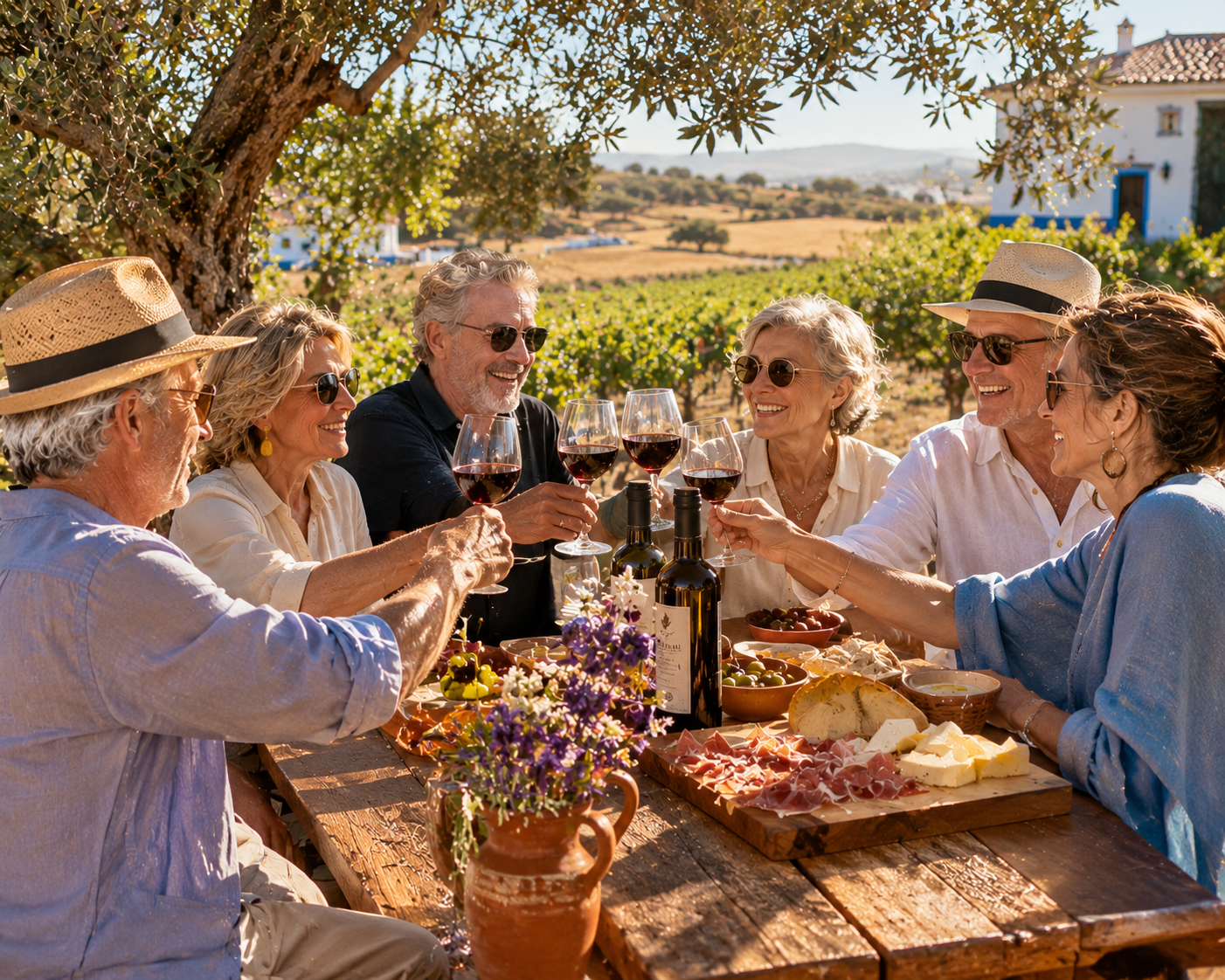
Cork, Wine and Olive Oil
A Private Tasting in a Family Cellar
Borba, Reguengos and Évora
Taste wines from the estate with the family who makes them.
Reguengos and Vidigueira: family cellars and clay vessels
Reguengos centres on the countryside around Reguengos de Monsaraz. Vidigueira lies farther south, in the broad landscape of Baixo Alentejo. These names offer different starting points for a wine journey: family cellars around Reguengos, and a living clay-vessel tradition in Vidigueira. Neither should be treated as a promise that every bottle will taste alike.
In Reguengos, a family tasting brings the vineyard and the lunch table close together. Walk the vines, see the cellar and taste wines alongside bread, cheese and cured meats. Asking which local grapes went into the glass keeps the conversation concrete. The food gives those wines a setting beyond the tasting itself.
Vidigueira introduces talhas, the large clay vessels used to ferment wine through a method with Roman roots. A visit devoted to wine made in clay amphorae allows you to see the vessels and learn how they are used. Tasting talha wines alongside modern bottlings makes the method easier to understand. Leave room for a traditional meal, so the comparison continues naturally at the table.
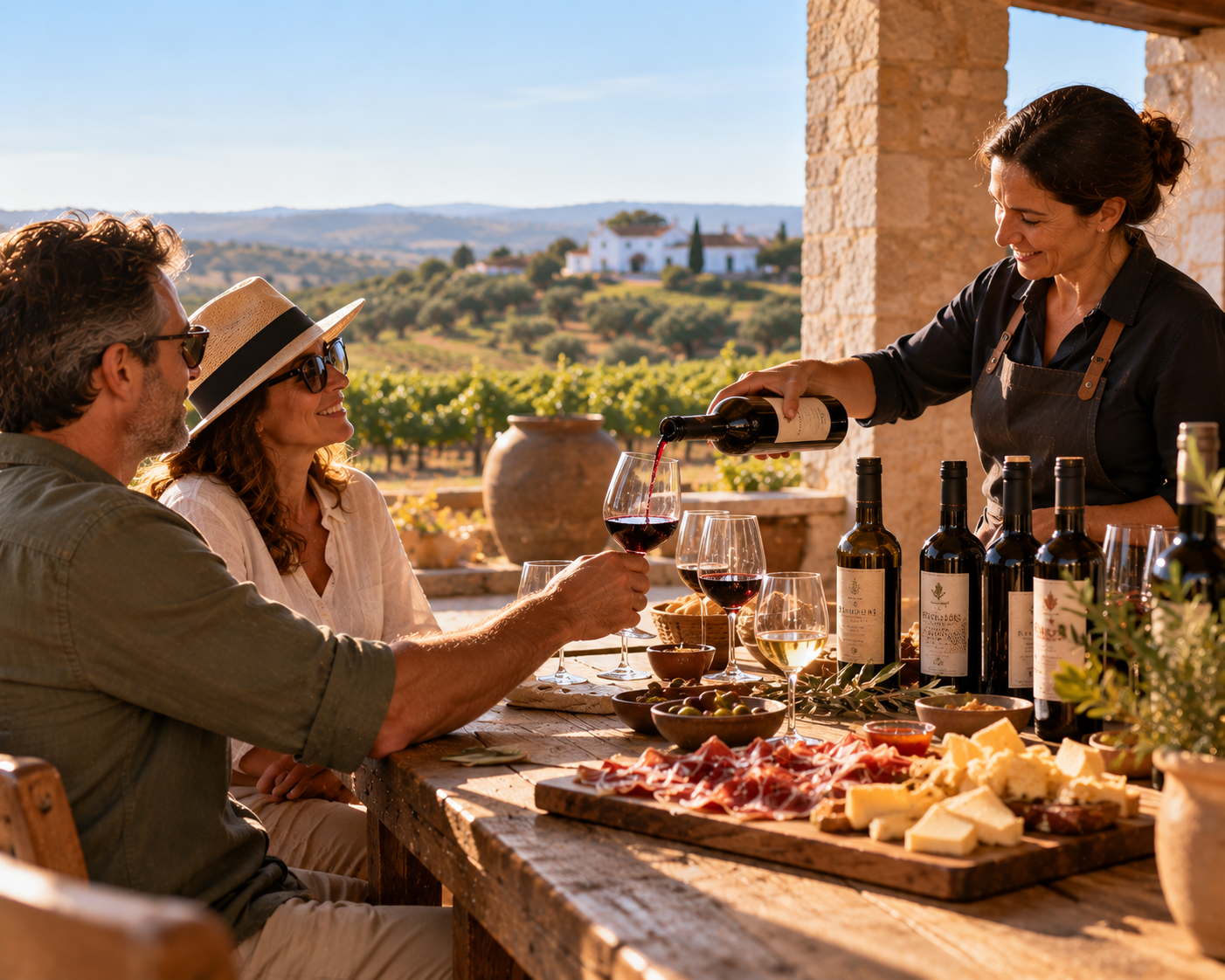
Cork, Wine and Olive Oil
Wine Made in Clay Amphorae
Vidigueira
Taste wine made with a method that dates back to Roman times.
Granja-Amareleja and Moura: the southern wine landscape
Granja-Amareleja and Moura bring the wine map into the southeastern Alentejo. Around Granja and Amareleja, and farther south around Moura, the setting is one of open plains, olive groves and whitewashed towns. These are wine sub-regions within a wider landscape, rather than separate worlds to explore in isolation.
The broader Baixo Alentejo gives this part of the journey its texture. Wheat turns gold in early summer. Olive leaves show silver above the rows. In spring, green fields and wildflowers soften the plains; by midsummer, the heat encourages outdoor wandering in the morning or evening.
For a visitor, the useful distinction is between a place name and a promise of flavour. Neither Granja-Amareleja nor Moura needs to stand for a single style in the glass. Let the particular wine lead the conversation, with bread, olives and local cheese keeping the tasting connected to the surrounding countryside. Between glasses, the olive groves offer another way to understand the southern table, where oil and bread belong beside wine.
The eight names make the map clearer. The pleasure lies in noticing what changes from place to place.