
Bread arrives at the Alentejo table as more than an accompaniment. It holds a fragrant broth, thickens in a pan and catches the juices of a slow-cooked stew. A firm slice, a little garlic and olive oil can give a dish its shape.
Açorda, migas and ensopado reveal different ways of cooking with that same loaf. Their textures matter: bread softened in hot liquid, bread worked into a cohesive mass, bread laid beneath tender meat and its broth.
Across the southern plains, wheat fields and silver-leaved olive groves give this cooking its setting. At the table, the ingredients remain recognisable. Coriander scents the bowl; oil glistens on its surface.
Bread and olive oil: the foundations
In Baixo Alentejo, wheat turns gold in early summer and olive groves run in silver rows. Bread and olive oil connect these fields to the kitchen. Traditional Alentejo wheat bread has a substantial crust and a close crumb, suited to soaking up liquid without immediately losing all its structure.
A loaf need not be fresh to be useful. Bread left from an earlier meal becomes the basis of açorda or migas, or waits in slices beneath a stew. This practical habit gives each dish a different texture. The cook decides whether the bread should remain distinct, soften through or come together in the pan.
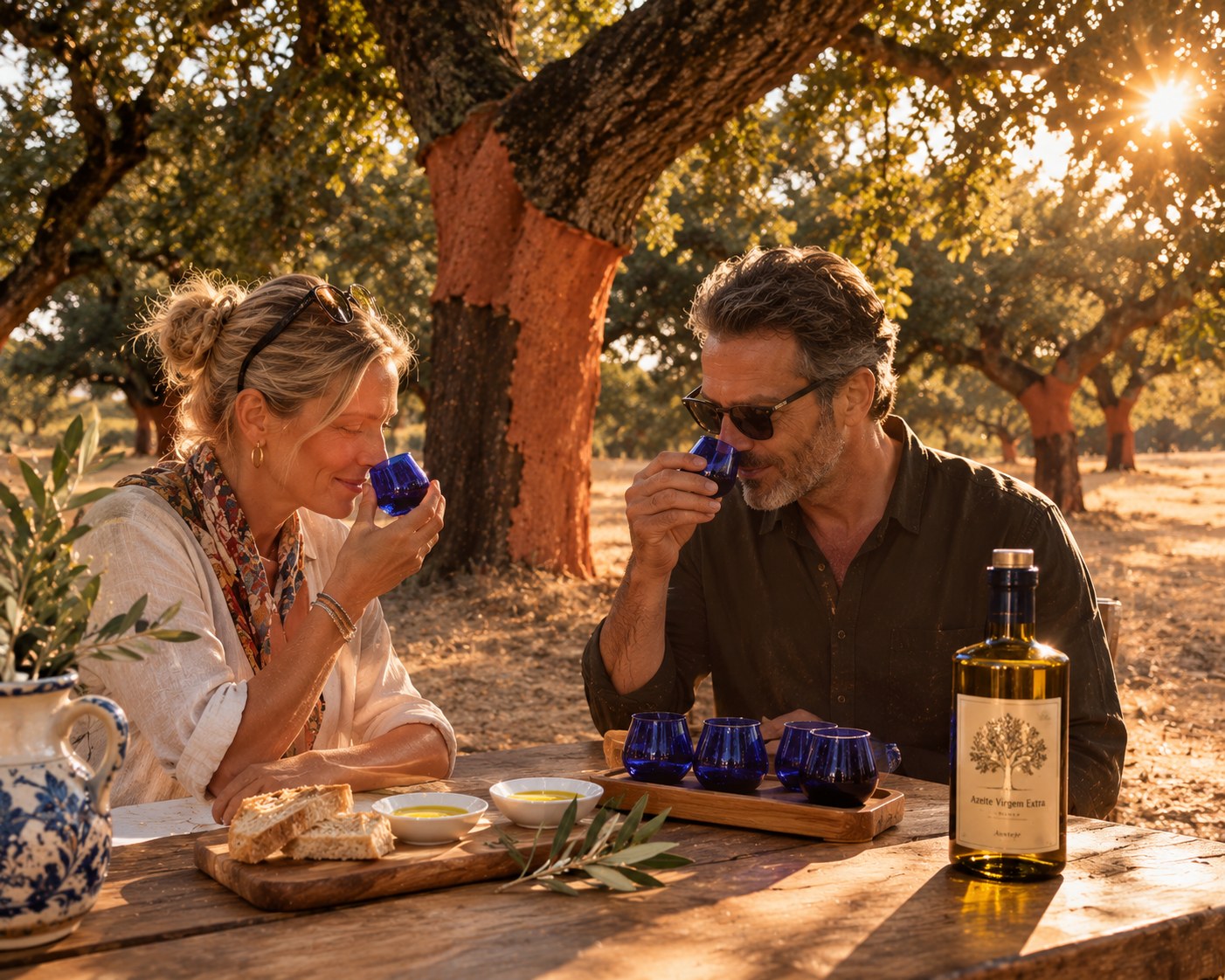
Olive oil brings flavour as well as richness. Its grassy scent and peppery finish are easier to notice when tasted simply with bread. A guided olive oil tasting at the mill includes a walk among the trees, an introduction to pressing and a comparison of oils with a producer. Taste the oils before adding tomatoes and salt, allowing their differences to register on the palate.
Cork, Wine and Olive Oil
Olive Oil at the Mill
Alentejo olive groves
Taste fresh olive oil beside the groves it came from.
Açorda: bread in a fragrant broth
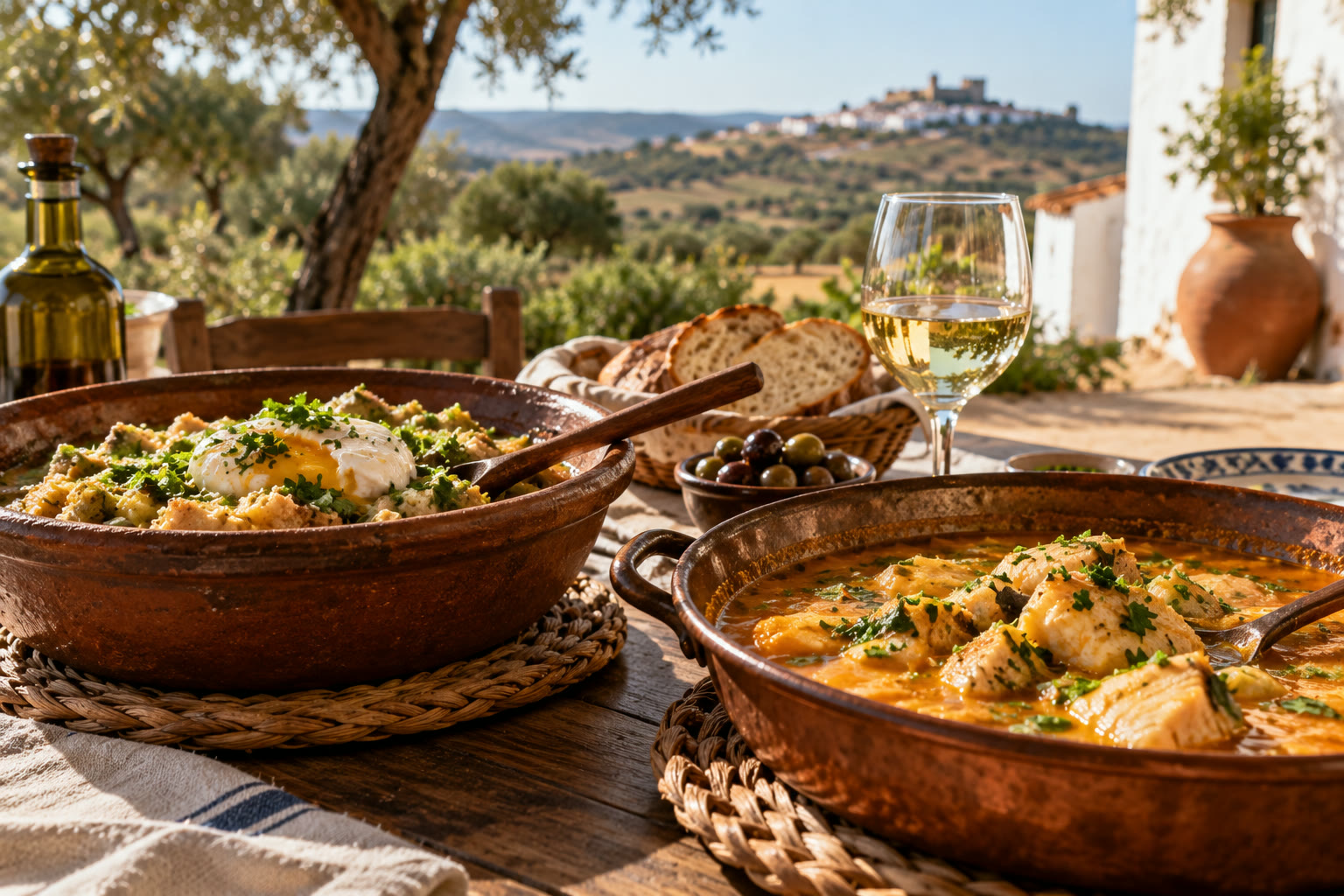
Alentejo açorda is a brothy dish, not a thick bread purée. Its familiar foundation is sliced bread, garlic, fresh coriander, olive oil and hot water. Garlic and coriander are traditionally crushed with salt, then mixed with oil. Hot water releases their scent, making a fragrant liquid that soaks into the bread.
The result retains a distinction between bread and broth. Slices soften and swell, while liquid remains around them. If you know açorda from thicker preparations elsewhere in Portugal, this can feel like a different dish. Here, the spoon meets soaked crumb and a light, garlicky broth rather than a uniform mixture.
Eggs often accompany it, commonly poached, with the yolk bringing richness to the bowl. Versions vary between households and kitchens, so the name does not imply an identical preparation everywhere. What remains characteristic is the directness of the flavours: coriander, garlic, wheat bread and olive oil. Eat it while the broth is warm and the herbs still fragrant, noticing how the bread changes as it absorbs the liquid.
Migas: bread worked in the pan
Where açorda leaves bread in broth, migas brings it together in the pan. Stale bread is softened, then worked with garlic and fat until the pieces become a cohesive mass. The texture is substantial rather than soupy. Depending on the preparation, the outside may take on a light crust while the centre stays soft. Bread is not a garnish here. It gives the dish its shape and substance.
In the Alentejo, bread migas often accompany pork, taking up the flavour of the cooking fat and juices. Recipes vary between households, so the name does not promise an identical plate wherever you eat. Garlic remains a familiar thread, alongside the practical habit of giving leftover bread another purpose.
The farmhouse cooking experience offers another expression: migas with a poached egg, within a meal shaped by seasonal produce. Watching the dishes come together makes the method tangible. Softened bread, a hot pan and patient handling turn familiar ingredients into lunch, eaten with views across the working farm.
Cork, Wine and Olive Oil
Copper Pots and Farmhouse Cooking
A working farm in the Alentejo
Traditional dishes from copper pots, cooked slowly on a working farm.
Ensopado: stew served over bread
Ensopado de borrego is a traditional lamb stew served over sliced bread. The meat cooks in a seasoned broth until tender; the bread waits beneath it, ready to absorb the liquid. Unlike migas, it is not worked into a mass in the pan. Unlike açorda, the dish centres on the meat and the broth produced by its cooking.
Garlic, onion, bay leaf and olive oil are familiar ingredients in Alentejo versions, though household recipes differ. The essential relationship is between lamb, broth and bread. A slice with some firmness can soften under the ladled stew while retaining enough structure to lift with a spoon. What begins as an accompaniment becomes part of the dish itself.
At the table, allow the bread to take up the juices before tasting it alongside the lamb. Its flavour now carries the contents of the pot. This is another expression of the region’s bread-based cooking: not bread added as an afterthought, but bread placed deliberately where it can gather what slow cooking has released.
A Baixo Alentejo table, from Serpa to Vidigueira
In Serpa, cheese belongs alongside the bread and olive oil that run through Alentejo cooking. The town is known for its cheese as well as its walls. At the table, these foods offer a different texture from açorda, migas and ensopado: bread torn rather than soaked, cheese cut to share, oil tasted on the crumb.
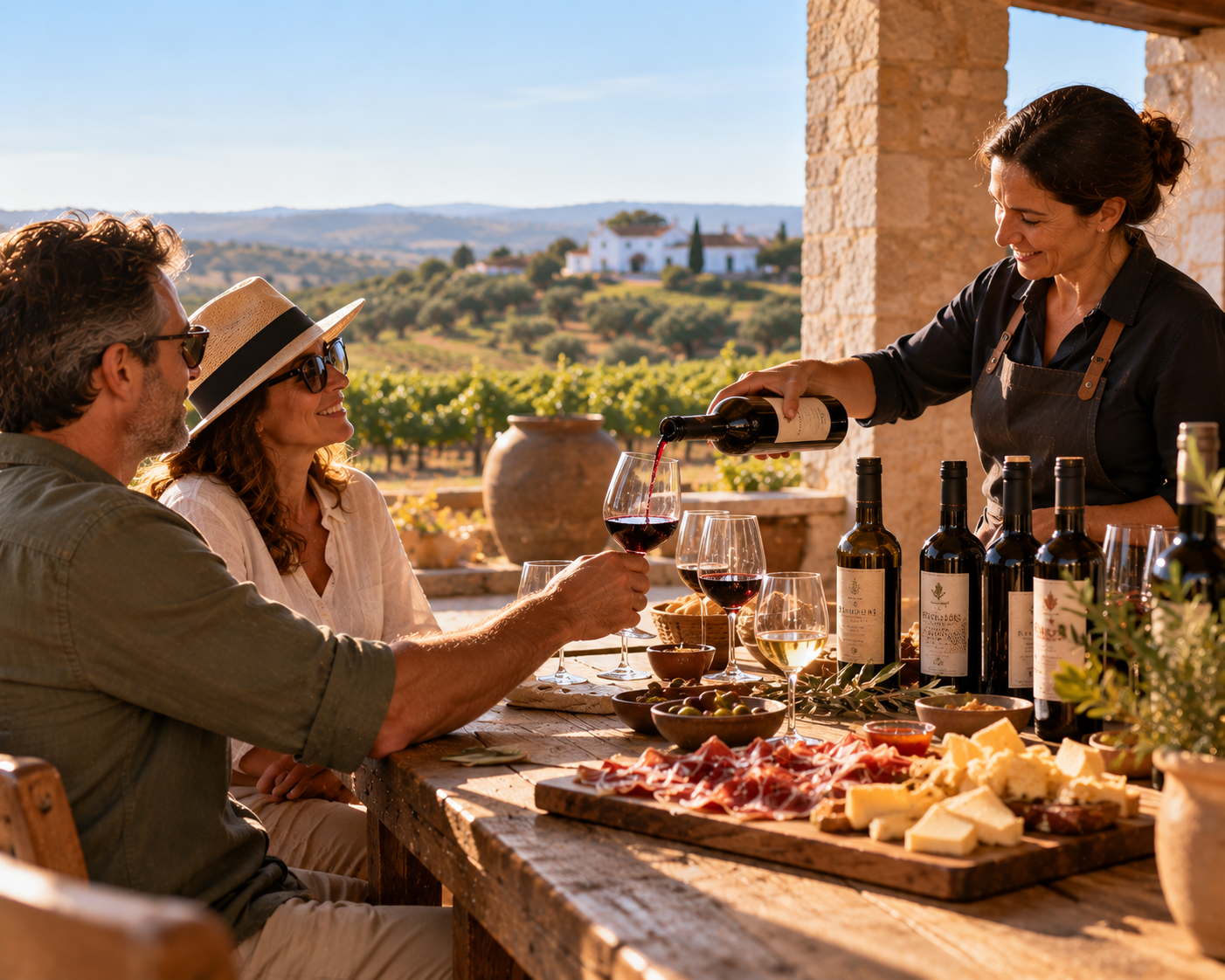
Vidigueira brings clay into the story. Here, the tradition of fermenting wine in large vessels called talhas continues a method with roots in Roman times. A visit centred on wine made in clay amphorae allows travellers to see the vessels, learn how they are used and taste amphora wines alongside modern bottlings.
A traditional meal can form part of that experience, in the cellar or nearby. It is an opportunity to place the wine beside regional cooking, rather than taste it in isolation. Leave the particular dishes open: a traditional meal does not necessarily include açorda, migas or ensopado. Each offers a different way to understand bread’s place at the Alentejo table.
Cork, Wine and Olive Oil
Wine Made in Clay Amphorae
Vidigueira
Taste wine made with a method that dates back to Roman times.
The common thread is bread: carrying olive oil, softening in broth, or gathering the last juices from a plate.