In the Alentejo, a clay vessel can tell a story that reaches back to Roman times. Large talhas remain part of village winemaking, used for fermentation rather than kept simply as objects from the past. The tradition survives through small producers who continue to work with clay, gravity and time.
Vidigueira offers a place to meet that tradition. Around it lie the southern plains, olive groves and whitewashed towns of Baixo Alentejo. A visit brings the vessels and the wine together: old clay forms in the cellar, earthy flavours in the glass, and a traditional meal that leaves room to understand the wine at the table.
What vinho de talha means
Vinho de talha means wine made in a talha, a large clay vessel used for fermentation. Often described as amphora wine, it takes its name from the container at the centre of the method. Here, clay is not simply part of the cellar’s appearance. It has a working role in turning grapes into wine.
The method dates back to Roman times and has survived in Alentejo villages through centuries of use. Small producers maintain it as a living practice, not merely a historical demonstration. The distinction matters when visiting: the old talhas are tools to understand, as well as objects to look at. Learning how they are used gives the tasting that follows a concrete point of reference.
The wine made in clay amphorae experience offers that connection between vessel and glass. Seeing the talhas and hearing how they work makes an ancient technique less abstract. Begin with the clay itself, then let the wine bring the conversation back to the present.
Vidigueira and a living wine tradition
Vidigueira belongs to Baixo Alentejo, the southern country of broad plains, olive groves and white towns beneath an open sky. Wheat turns gold in early summer. Olive trees draw silver rows across the land. This is the setting for a wine tradition maintained by small producers, with the talha still at the centre of their work.
Come for the wine, but allow the surrounding landscape to remain part of the visit. Spring brings green plains and wildflowers; midsummer can be very hot, making mornings and evenings sensible choices for time outdoors. A cellar visit need not become a hurried stop between towns. Leave space to see the vessels, listen to the explanation and sit down to a traditional meal.
The region’s bread, olive oil and cheese provide a wider introduction to its table. Nearby Serpa is known for its cheese and its walls. These are separate expressions of the same region, worth discovering without turning every dish into a prescribed wine pairing. Vidigueira gives the journey a clear focus: clay and the wine it holds.
How clay shapes the cellar
In a talha cellar, the vessel is part of the method, not simply a place to keep the finished wine. These large clay pots hold the wine during fermentation. Seeing the old talhas makes that distinction tangible: the clay belongs to the making of the drink, rather than merely its presentation at the table.
The technique has Roman roots and survives through small producers in Alentejo villages. Its continuity rests on practical knowledge passed through generations. Clay, gravity and time remain central, rather than heavy machinery. The old vessels are working objects, carrying a tradition forward through use.
A visit offers a chance to understand that work at the scale of the vessel itself. Ask how the talhas are used and how the wine moves from fermentation towards the glass. Let the explanation begin with what stands in front of you. The interest lies in the relationship between material and method: a large clay pot, the work it requires, and the wine that emerges from it.
Tasting talha wine beside modern bottlings
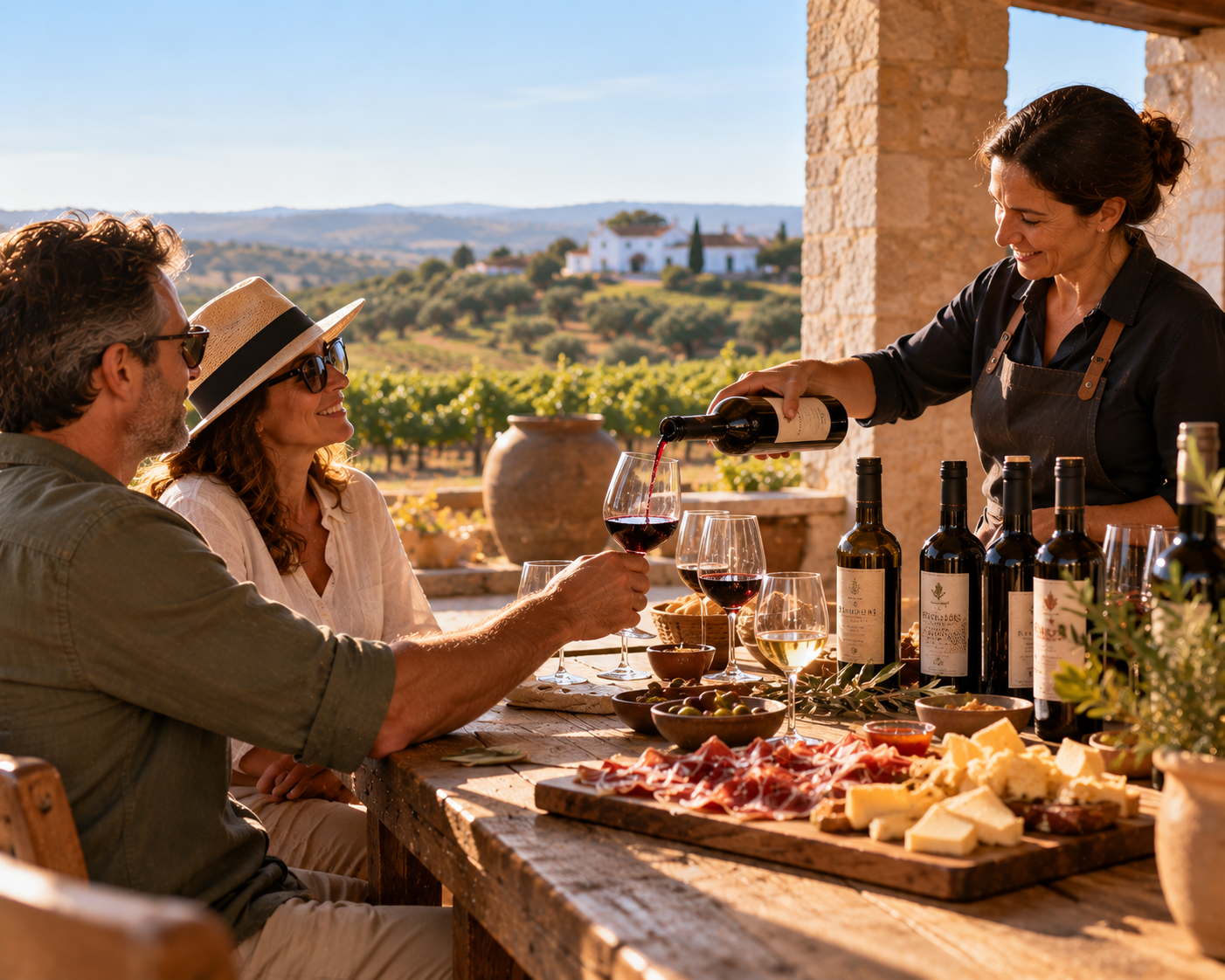
In Vidigueira, a tasting brings the cellar and the glass into the same conversation. The Wine Made in Clay Amphorae experience includes seeing old talhas, learning how they are used and tasting amphora wines alongside modern bottlings. Allow 2 to 3 hours for the experience, leaving space for explanation rather than treating it as a quick stop.
The talha wines are described as earthy. Take that as a starting point, not a flavour you need to find in every glass. Smell, taste and return to the wine after hearing about its making. The comparison with modern bottlings gives the conversation a concrete focus: what you notice in the glass, and what the producer can explain about the method.
There is no need to turn the tasting into a contest between old and new. Pay attention to differences without deciding in advance which style you prefer. Seeing the vessels before tasting gives the wine a physical context. What began as a clay pot in the cellar becomes something you can consider slowly in the glass.
Cork, Wine and Olive Oil
Wine Made in Clay Amphorae
Vidigueira
Taste wine made with a method that dates back to Roman times.
Leave room for the table
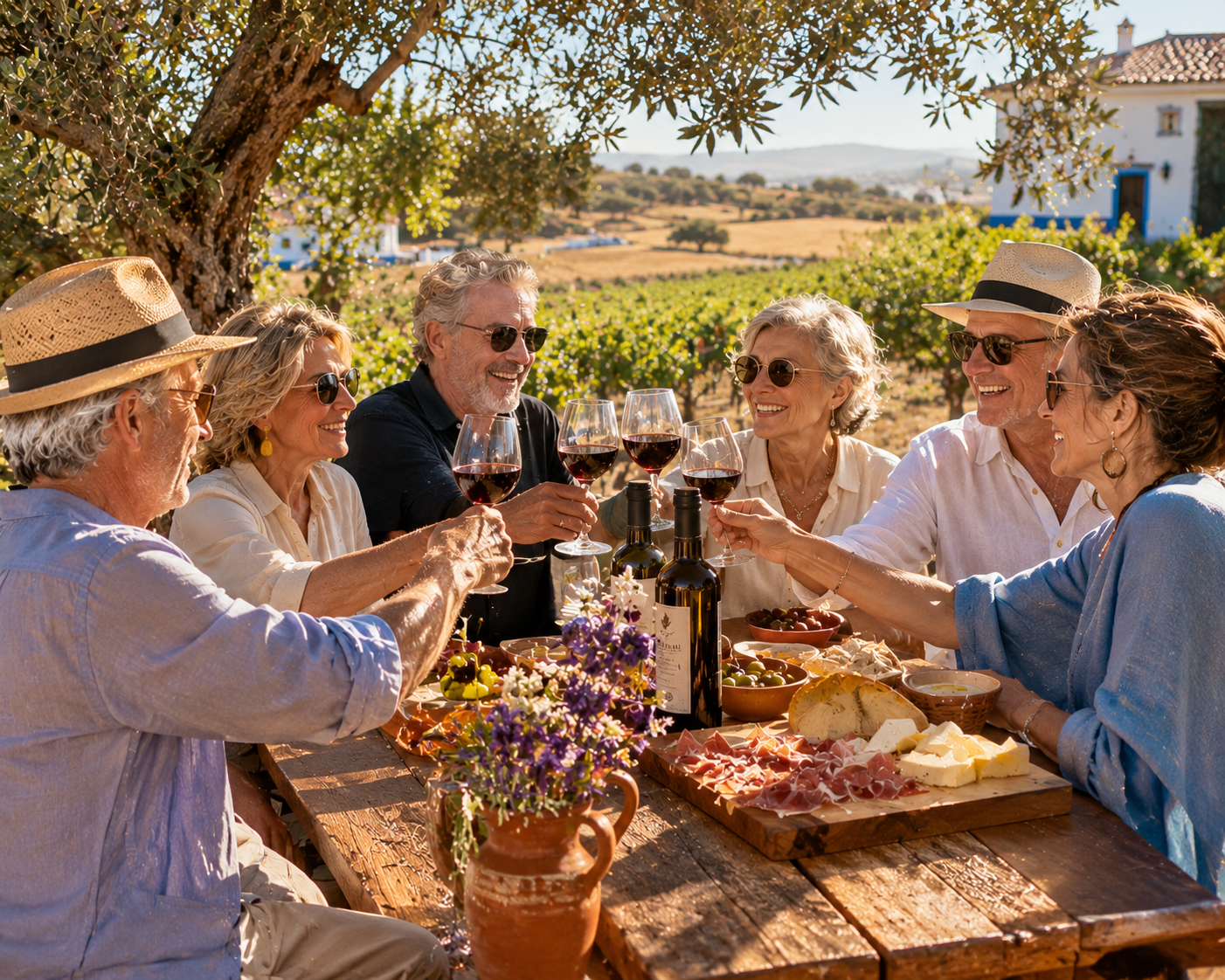
A talha tasting need not end with the final glass. The experience includes a traditional meal in the cellar or nearby, giving the wine a place at the table rather than leaving it as a subject for comparison. After seeing the clay vessels and learning how they are used, there is time to sit, eat and let the conversation move beyond fermentation.
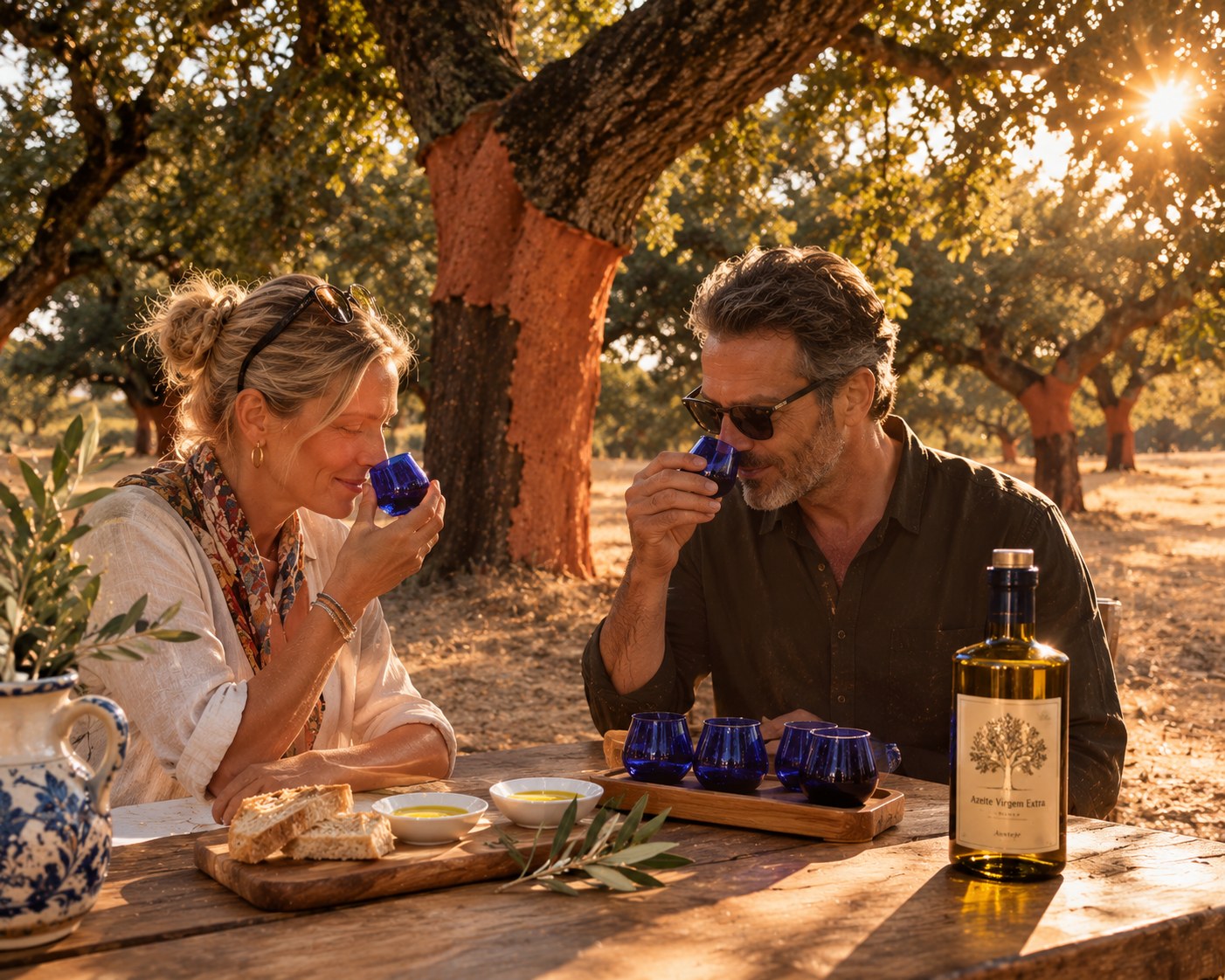
In Baixo Alentejo, bread, olive oil and cheese belong to the regional table. Serpa is known for its cheese; across the plains, olive groves stand in silver rows. These foods offer another way to understand the country around Vidigueira. There is no need to prescribe a cheese for each glass or turn lunch into a further tasting exercise.
Leave room in the day for this part of the visit. The meal matters as much as the explanation of clay, gravity and time. Wine made through a technique with Roman roots remains part of an everyday culture of food, sustained by small producers who keep the vessels in use.
The clay belongs to the cellar. The wine belongs at the table.