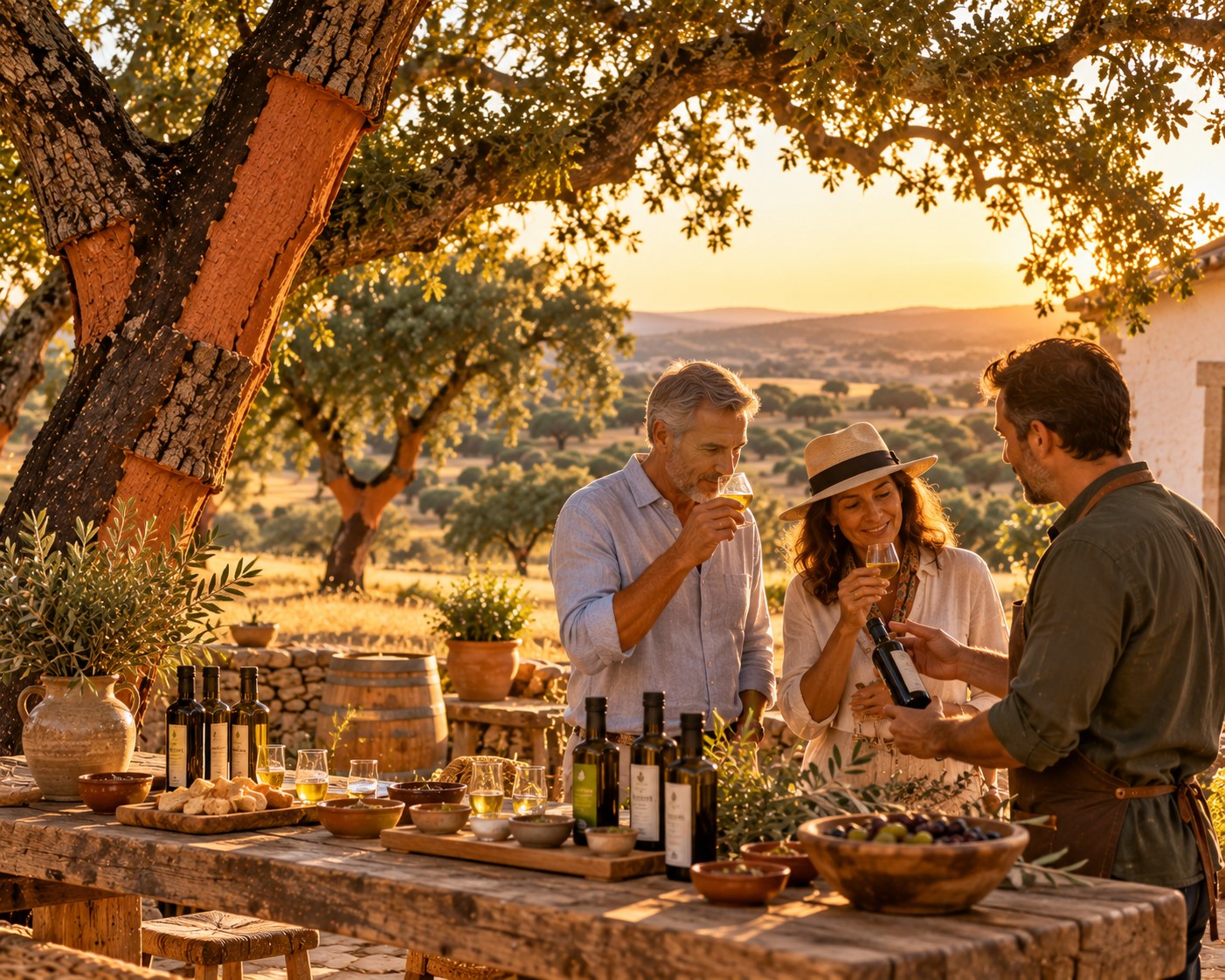
Before black Iberian pork reaches the table, its story belongs to the oak woods. In the Alentejo, pigs forage beneath broad crowns, sharing a landscape of pasture and scattered trees with sheep and cattle. The space between the oaks is part of the farm, not a gap in the forest.
At the table, that landscape finds expression in cured ham and fresh pork, with bread and olive oil close at hand. Yet porco preto does not tell the whole story of a meal. The animal, its feed and the way it was raised deserve separate attention. Understanding those distinctions makes a walk through the montado as revealing as lunch.
Black Iberian pigs in the Alentejo
Porco preto means black pig, a familiar term on Portuguese menus. In the Alentejo, it is closely associated with the Alentejano pig, a native breed within the Iberian pig family. Its dark colouring is recognisable, but appearance alone cannot tell you what an animal ate or how it lived.
Breed describes the animal. Free-range rearing describes how it is kept. Acorn feeding describes part of its diet, tied to the season when the oaks drop their fruit. These ideas often meet in the montado, but they are not interchangeable. A reference to black pork should not automatically be read as a promise of acorn feeding.
On the featured montado estates, black pigs spend autumn and winter in the fields, feeding on acorns that contribute to the flavour of their ham. That is a specific farming practice rather than a definition of all porco preto. When choosing pork or cured ham, asking about its origin and feed offers more insight than the name alone. It also brings the farmer back into the story.
The montado is a working oak landscape
The montado is open woodland shaped by farming. Cork oaks and holm oaks stand above grass and grazing ground, their crowns separated by stretches of light. It is not a dense forest. Its character comes from the relationship between trees, pasture and animals, maintained through generations of use.
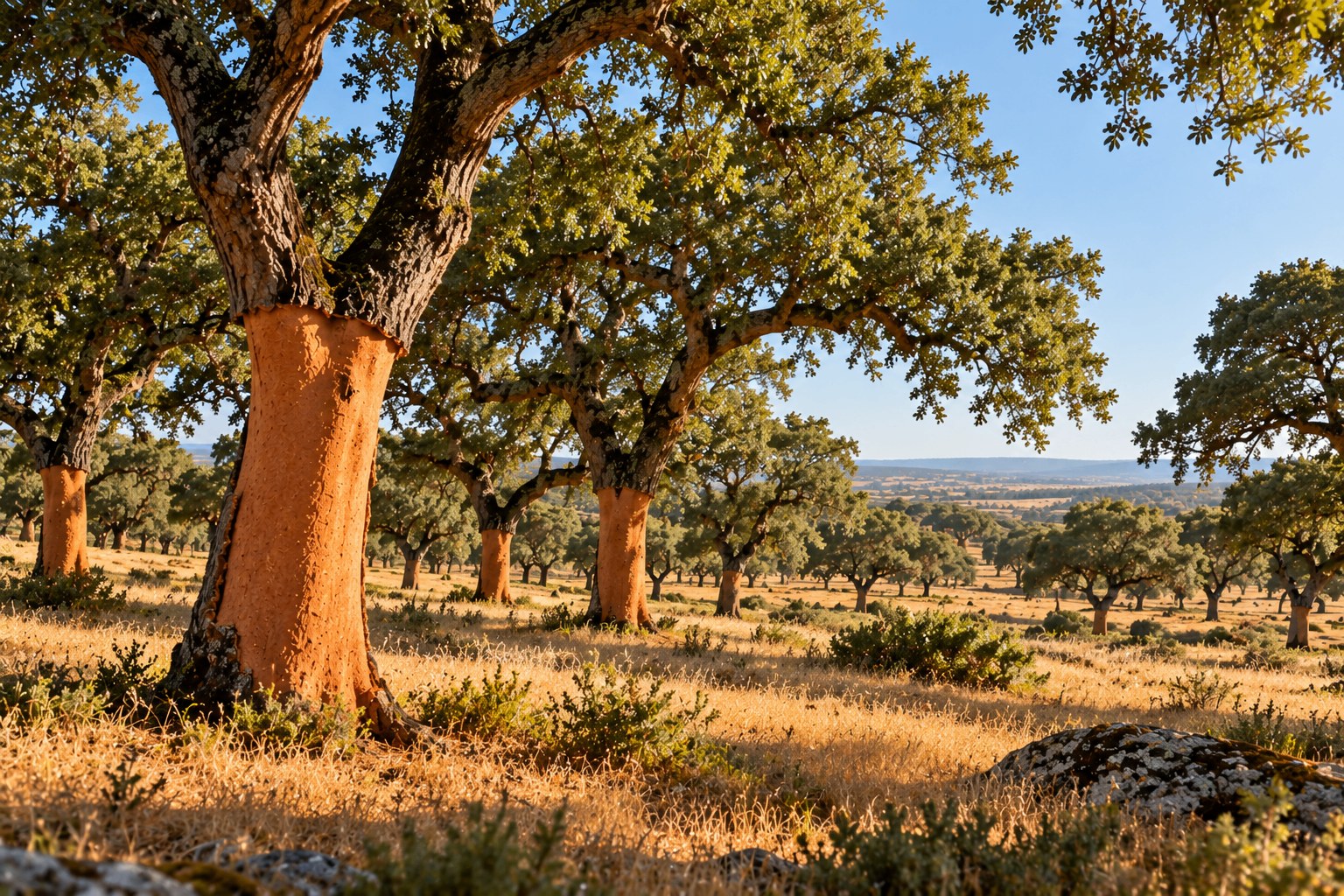
Sheep graze beneath the branches. Cattle and black pigs find shade among the trunks, while wild birds share the same landscape. Acorns provide seasonal food; cork provides a renewable harvest from living trees. Skilled workers strip the bark by hand about every nine years, leaving the oak standing to grow another layer. Freshly harvested trunks show orange against the older bark.
The listed cork oak forest walk takes place in the Évora countryside. With a local expert, visitors walk among centuries-old trees and learn to read the harvest markings. A picnic or lunch follows in their shade. It is a way to see the montado as a place of work and food, rather than simply a backdrop of trees.
Cork, Wine and Olive Oil
Inside a Cork Oak Forest
Évora countryside
Walk through the montado, the cork oak landscape that defines the Alentejo.
Autumn acorns and winter grazing
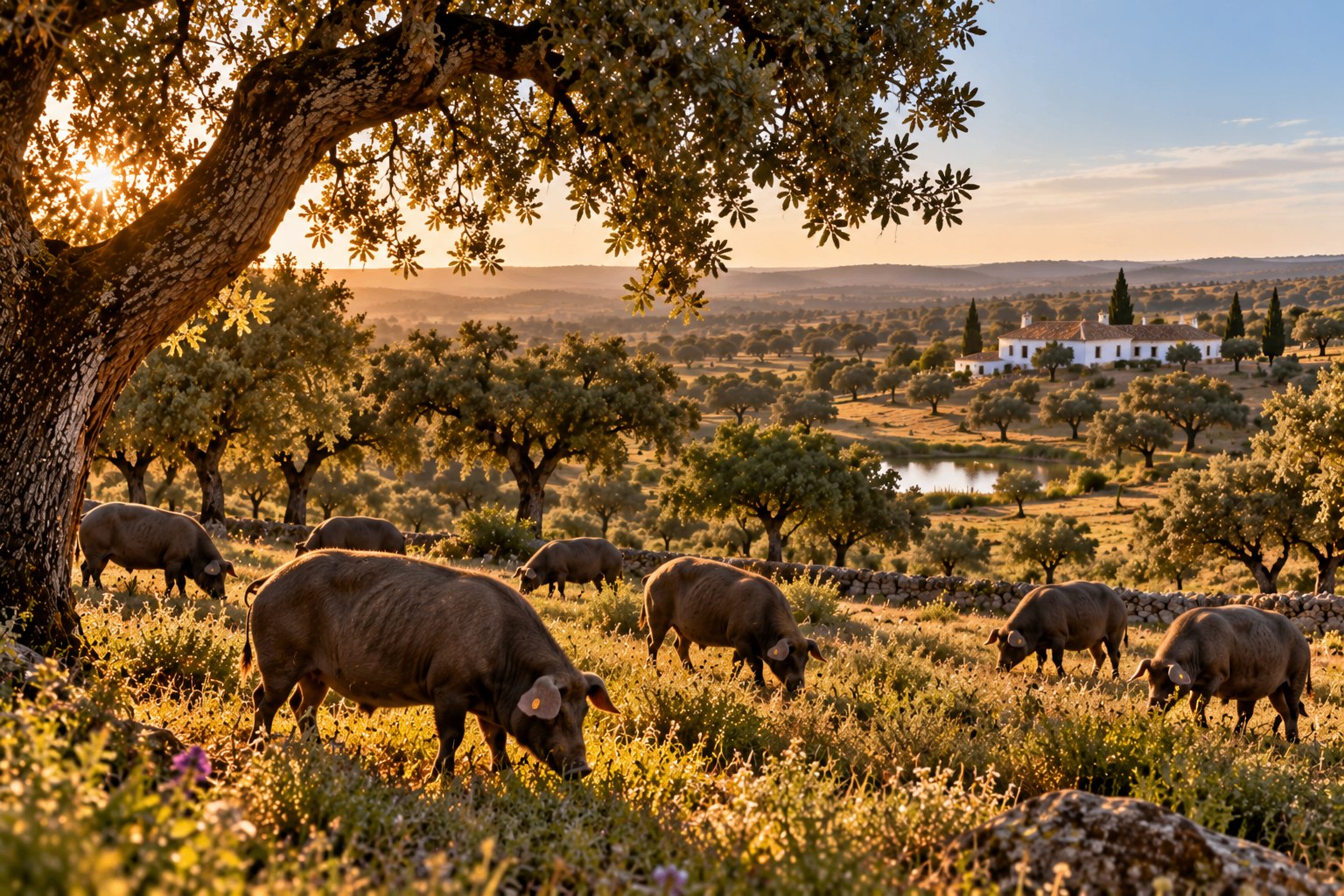
In autumn and winter, black pigs on the featured montado estates spend their days in the fields beneath the oaks. Fallen acorns become part of their feed, connecting the woodland’s seasonal crop with the flavour of its cured ham. This is a seasonal relationship, rather than a description that applies automatically to every piece of pork called porco preto. The animal’s identity and the way it has been fed are different questions.
Here, low-density husbandry gives the landscape its working rhythm. Sheep graze beneath the trees, cattle move through the grass, and pigs forage under the oak canopy. The woodland is neither an untouched wilderness nor simply a backdrop to lunch. It is pasture, shade and a source of food, tended by farming families.
Acorns contribute to the ham’s depth of flavour, but the story begins well before curing. Seeing the animals in the fields makes that connection tangible. Ask the farmer how feeding changes through the seasons, and let the answer describe this particular herd rather than stand for every farm in the Alentejo.
Walking the woods with a farming family
On montado estates of the interior, near the great lake, a visit follows the farming family’s rounds. The Free-Range Herds of the Montado experience allows half a day for walking the open oak plains and learning how the animals fit into the land around them. The tasks are ordinary and revealing: opening gates, moving the flock and checking the pigs beneath the trees.
There is room here to notice more than the pigs. Sheep provide milk for the region’s cheeses; cattle graze between the oaks. With the farmer, grass, acorns and shade become parts of a working system rather than separate details in a country view. The visit supports families who maintain this low-density, free-range husbandry.
Breakfast is served in the shade: bread, cheese from the flock, ham from acorn-fed pigs, and oil and wine from the estate. It gives the walk a direct continuation at the table. Taste the ham alongside the bread, then the cheese and oil, keeping the morning’s landscape in mind. The pleasure lies in knowing where these foods began.
Cork, Wine and Olive Oil
The Free-Range Herds of the Montado
Montado estates of the interior, near the great lake
Walk the open oak plains with a farming family, among sheep, cattle and black pigs that roam free between the trees.
From cured ham to the Baixo Alentejo table
At the table, porco preto takes different forms. Presunto is cured ham, sliced thinly and eaten without further cooking. Fresh pork belongs to the grill or the cooking pot. The distinction matters: a plate of ham and a grilled cut offer different textures and flavours, even when they come from the same kind of animal.
Grilled pork with migas is a familiar Alentejo pairing. Bread, garlic and fat become a substantial accompaniment, with a texture far removed from the dry loaf that began it. The browned edges of the meat sit against the softness of the bread. It is food rooted in a kitchen where yesterday’s loaf still has a purpose.
Across Baixo Alentejo, bread, cheese and olive oil give the meal its wider setting. Serpa is known for its cheese; olive groves run in silver rows across the plains. Leave room for these quieter elements of the table. They connect the pork to a landscape that also feeds sheep and carries olive trees.
The oak woods remain part of the meal: in the flavour of acorn-fed ham, and in the grazing that sustains a working landscape.