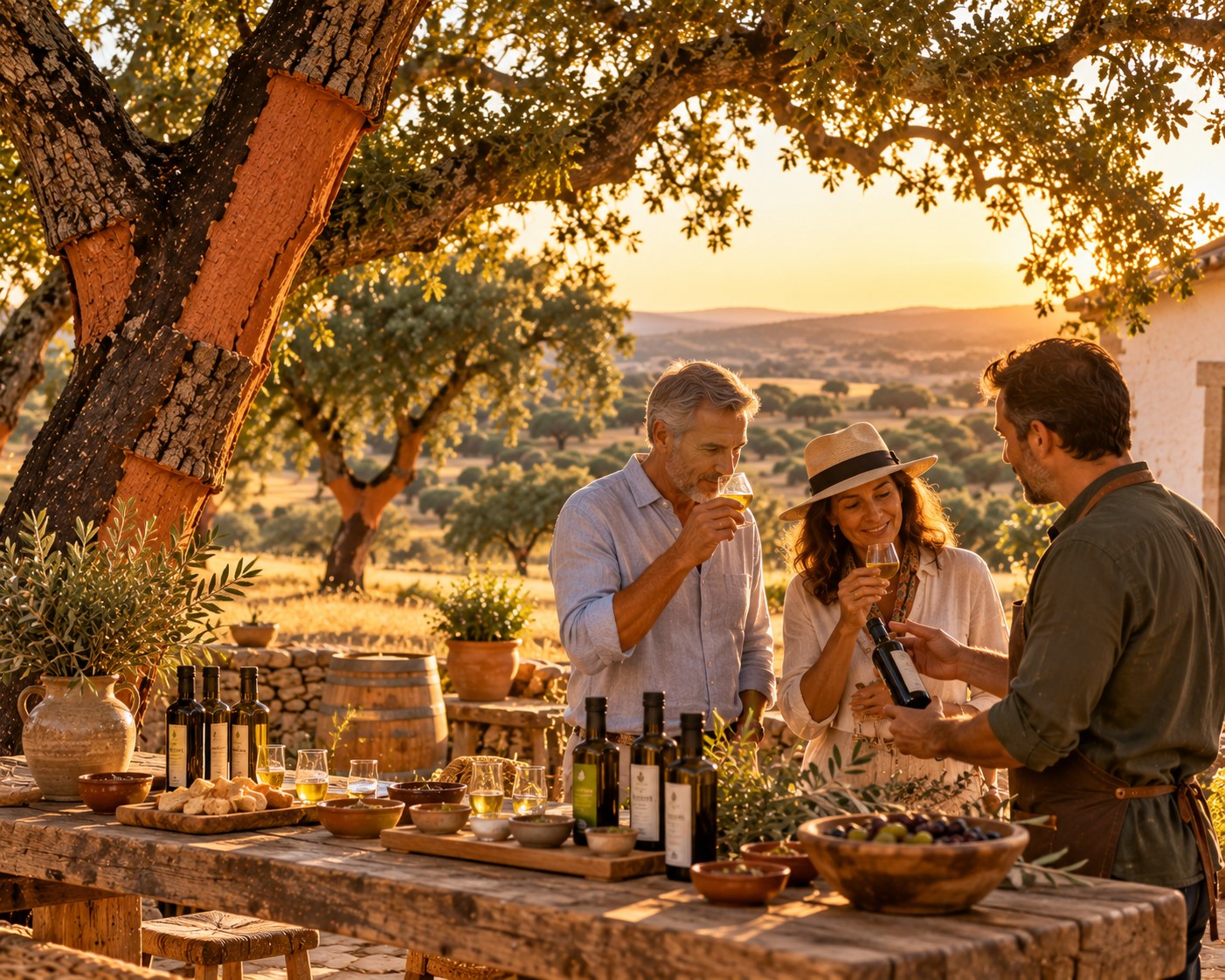
Bread torn by hand, olive oil poured into a dish, a cheese opened at the table. In the Alentejo, these simple foods lead back to working landscapes: olive groves, open pasture and sheep grazing beneath oaks. Cheese gives that connection a particular texture, from a yielding centre to a firm slice.
Serpa and Évora offer different expressions of sheep’s milk and thistle coagulant. Their names belong to places as well as cheeses. Serpa stands within the southern plains of Baixo Alentejo; Évora lies farther north, in Alentejo Central. Tasting them side by side is a useful beginning, before turning towards the flocks and the land that feeds them.
Serpa: sheep’s milk and a yielding paste
Serpa’s cheese tradition belongs to the country around its whitewashed, walled town. Made from sheep’s milk coagulated with thistle, the cheese develops a soft to semi-soft paste as it matures. Cut through the rind and the interior may yield gently to the knife. Its texture is part of the pleasure, not merely a way of serving it.
Thistle provides a plant coagulant, helping the milk set before the curd is worked and the cheese is cured. This shared ingredient does not make every cheese alike. Maturation changes the consistency and flavour, so a taste of Serpa need not suggest exactly the same softness on every occasion. Notice the paste rather than expecting it always to flow.
At the table, begin with a little cheese on its own, then add plain bread. That leaves room to notice its sheep’s-milk character and the flavour that lingers after a mouthful. Beyond the table, Serpa’s walls give the visit a tangible setting: cheese and town belong in the same account of the southern plains.
Évora: a smaller, firmer cheese
Évora’s cured sheep’s-milk cheese offers a different texture. Typically smaller than Serpa, it has a firmer paste that lends itself to cutting into small pieces. Thistle is again used to coagulate the milk. The contrast is useful: a shared milk source and coagulant can lead to cheeses with distinctly different textures.
Curing is central to its character. Rather than looking for a yielding centre, notice the resistance beneath the knife and the concentrated flavour of a small bite. Taste it before adding bread or wine. There is no need to turn the comparison into a contest; Serpa’s softness and Évora’s firmness offer different pleasures, and maturity matters in each case.
The geography deserves equal care. Évora belongs to Alentejo Central, not Baixo Alentejo. It therefore broadens a cheese journey beyond the southern plains rather than supplying another stop within them. Keep that distinction in mind when shaping your travels. These cheeses share a regional language of sheep’s milk and thistle, but their place names should not be treated as interchangeable.
The sheep beneath the oaks
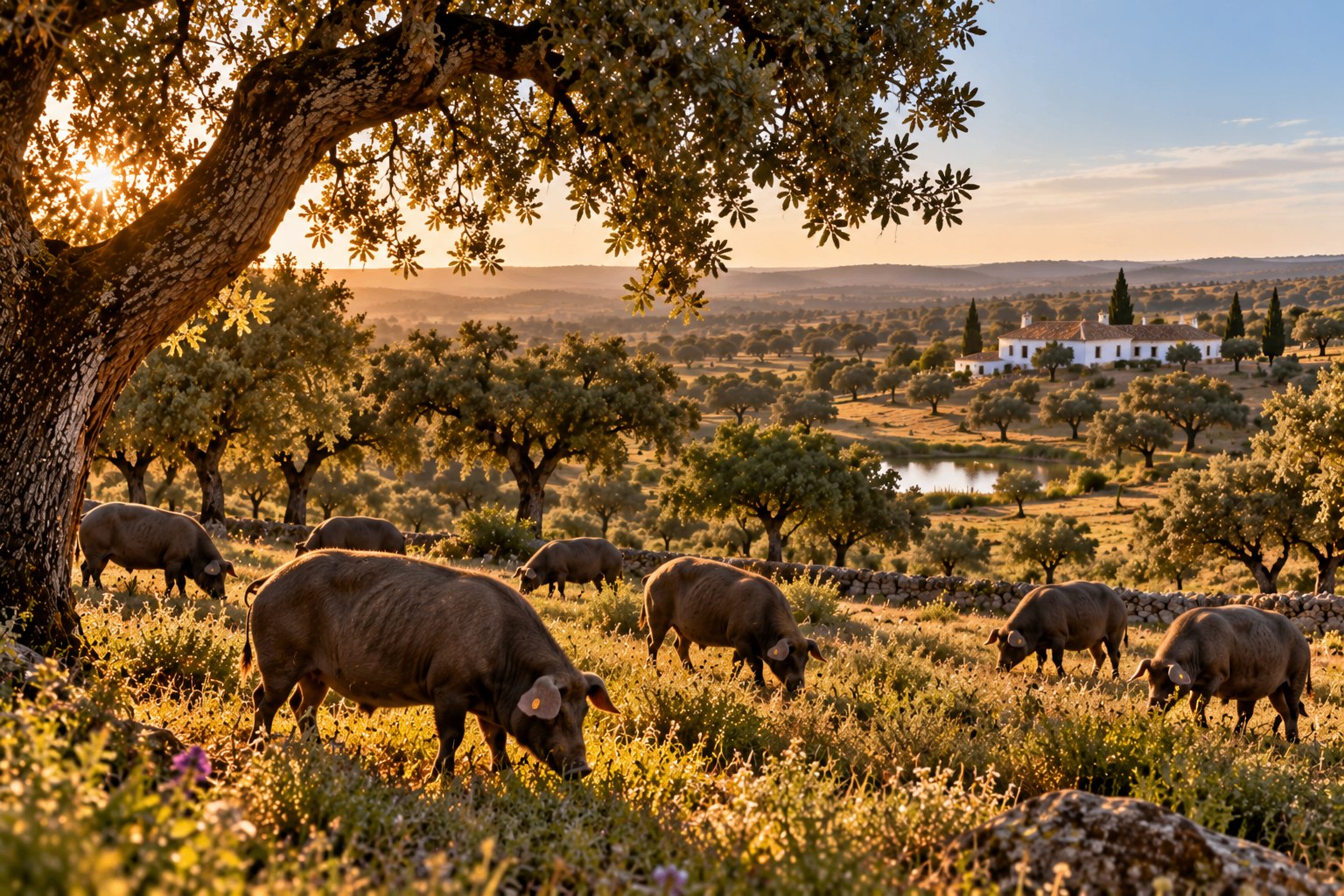
Beyond the cheese on the table lies the montado: open pasture beneath cork oaks, with sheep grazing between the trunks. Their milk supplies the region’s cheeses. On working estates of the interior, near the great lake, a visit with a farming family brings that connection into view. The landscape is not simply a backdrop. Grass, trees and livestock belong to the same working ground.
During The Free-Range Herds of the Montado, guests accompany a farmer on the rounds, opening gates, moving the flock and checking animals beneath the trees. Cattle and black pigs are part of these estates too. The visit follows farm work rather than a staged account of rural life.
A country breakfast gives the walk its counterpart: bread, cheese from the flock and olive oil, eaten in the shade. This is a chance to understand the husbandry behind the food. It is not a cheesemaking demonstration; watching milk become curd is a different activity and should not be assumed to form part of a flock visit.
Cork, Wine and Olive Oil
The Free-Range Herds of the Montado
Montado estates of the interior, near the great lake
Walk the open oak plains with a farming family, among sheep, cattle and black pigs that roam free between the trees.
Bread and olive oil beside the cheese
In Baixo Alentejo, cheese belongs naturally beside bread and olive oil. The table echoes the surrounding plains: wheat, olive groves and grazing land. Keep the tasting simple. Try the cheese by itself, then return to it with bread. There is no need to turn lunch into a formal exercise; noticing the texture and the way its flavour lingers is enough.
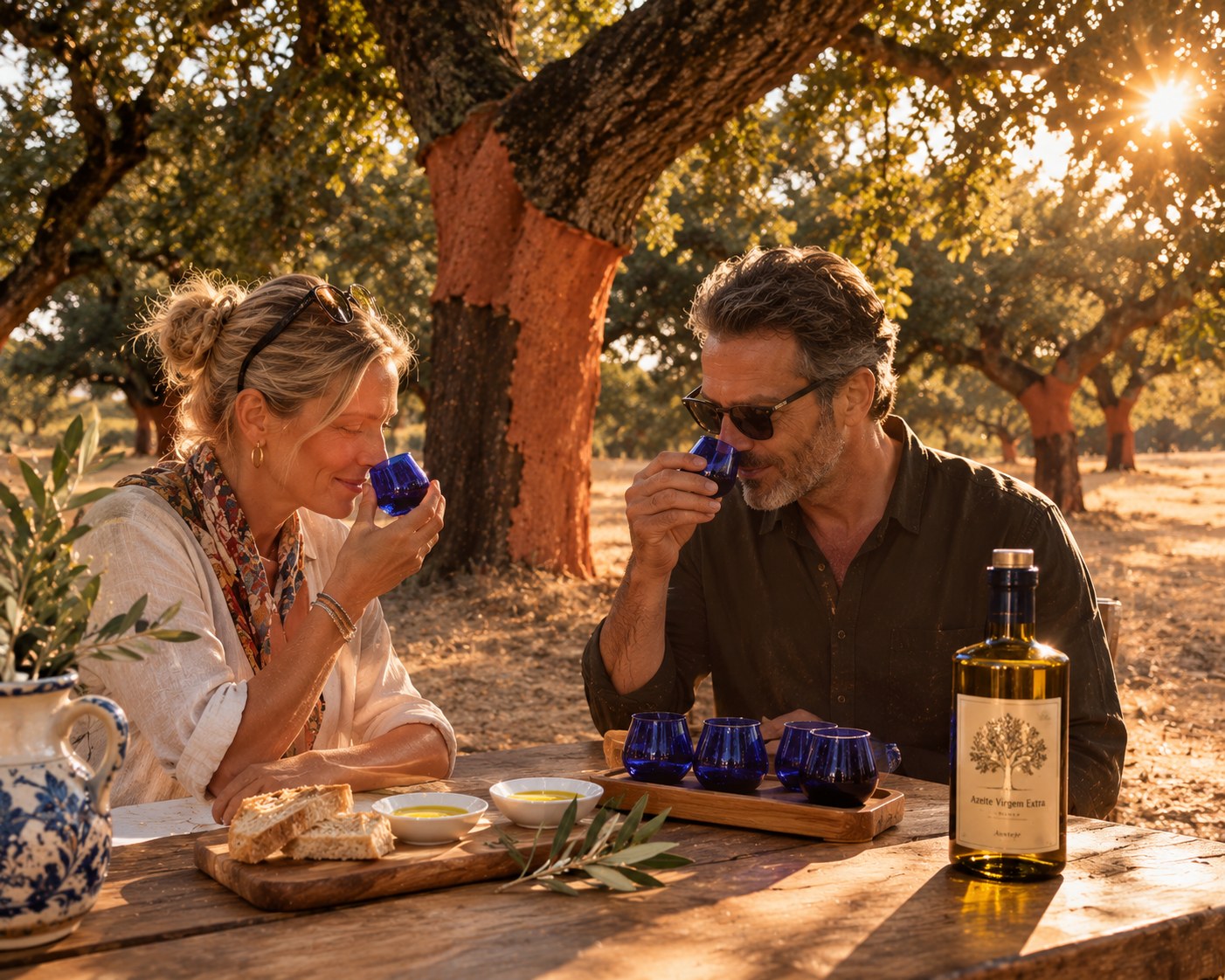
An olive oil experience offers a complementary way into this landscape. Walk through a grove, visit the mill and learn how the oil is pressed, then taste several oils with a producer. Bread, tomatoes and salt accompany the tasting. The smell of cut grass and the pepper at the back of the throat give you concrete things to notice, rather than a vocabulary to memorise.
Magik tip: In midsummer, place outdoor grove walks in the morning or evening, when planning around the Alentejo’s heat. Leave room in the day for the mill visit and guided tasting, rather than treating the oil as a quick addition to a cheese-focused outing.
Cork, Wine and Olive Oil
Olive Oil at the Mill
Alentejo olive groves
Taste fresh olive oil beside the groves it came from.
Continue to the talhas of Vidigueira
From the cheese table, continue to Vidigueira and its tradition of wine made in clay. Here, large vessels known as talhas hold fermenting wine, preserving a method with roots in Roman times. Clay, gravity and time shape the work. The vessels themselves offer a different way to understand the Alentejo, through what its cellars have kept in use.
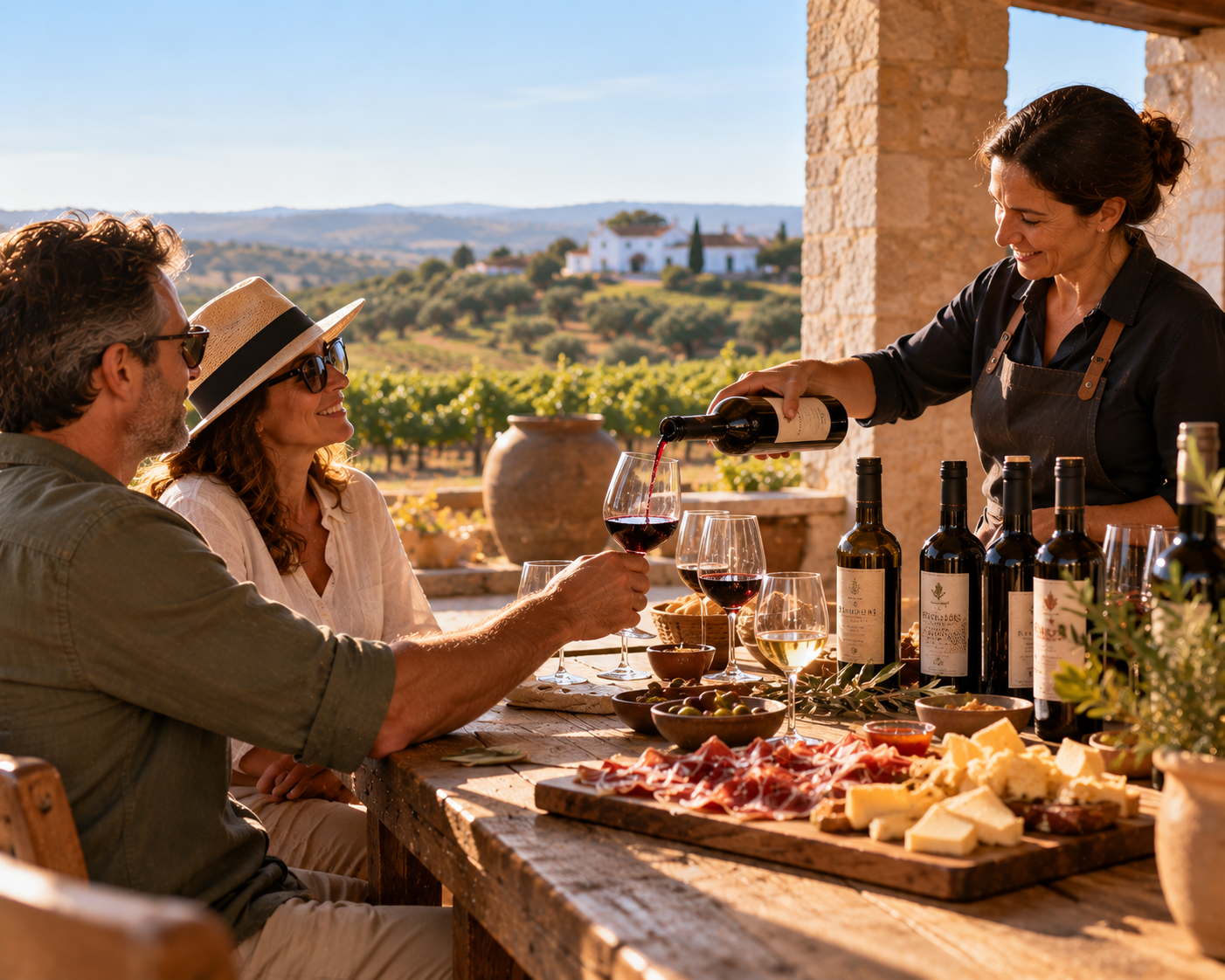
A clay amphora wine tasting brings you close to the old talhas and introduces how they are used. Taste these wines alongside modern bottlings, allowing the differences to emerge without expecting a particular style to suit every cheese. A traditional meal in the cellar or nearby gives the visit a place at the table rather than leaving it as a lesson in technique.
There is no need to prescribe a fixed pairing for Serpa or Évora cheese. Let the wine be a further expression of the countryside: sheep grazing beneath oaks, olive groves across the plains, and clay vessels still serving the small producers who work with them.
Cork, Wine and Olive Oil
Wine Made in Clay Amphorae
Vidigueira
Taste wine made with a method that dates back to Roman times.
Leave room for bread, a little cheese and the conversation that gathers around the table.