Olive oil season in the Alentejo is felt in small things: nets spread beneath branches, olives gathered into crates, fresh oil meeting a piece of bread. Silver leaves frame the work. At the mill, the grove returns as the scent of cut grass and a peppery sensation at the back of the throat.
From October to January, the calendar is a guide rather than a promise. Harvesting follows the fruit, the weather and the producer’s decisions. For travellers, that distinction matters. A walk among olive trees, a visit to a mill and time spent picking are different experiences, each worth approaching without expecting the others.
October: the season begins at its own pace
October can bring the beginning of the olive harvest, but not every grove moves to the same rhythm. Ripeness, weather and the kind of oil a producer wants to make all influence when picking starts. Trees beside the road may still carry their fruit while work is already under way elsewhere. A month on the calendar cannot tell you what a particular estate will be doing.
For an autumn visit, begin with the grove rather than the expectation of a working harvest. Walking among old olive trees gives the oil a setting: the trunks, the leaves and the land around them. At Olive Oil at the Mill, a producer guides visitors through the grove, the mill and a comparison of oils served with bread, tomatoes and salt.
Keep the distinction clear when shaping your day. Learning how oil is made does not necessarily mean watching olives being processed. Practical tip: choose a mill tasting for understanding and comparison; choose a harvest experience specifically for joining the work among the trees.
November: nets beneath the olive trees
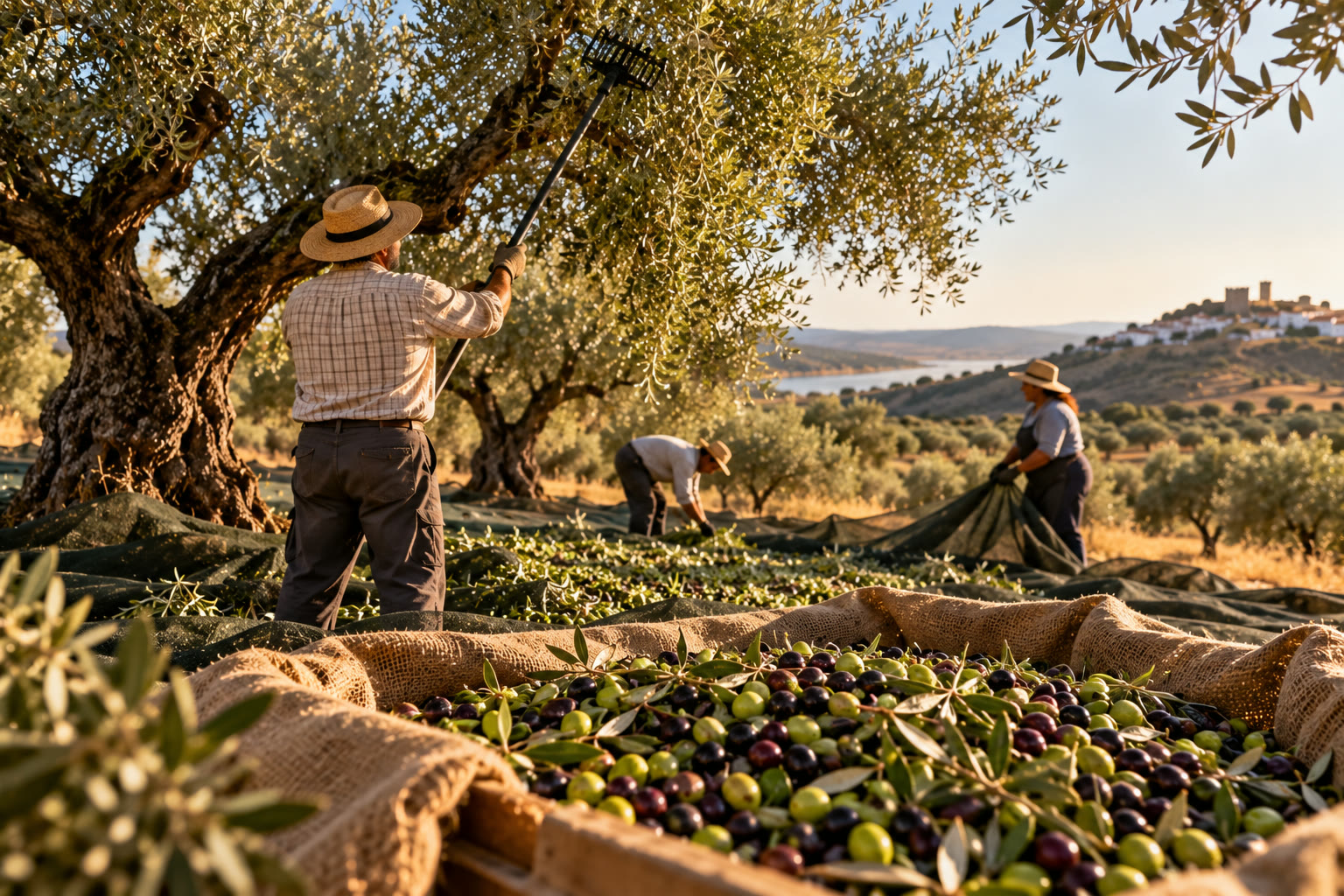
Late autumn brings the scene many travellers associate with olive country. Nets lie beneath old trees. Combs move through the branches, and gathered olives fill crates. On family estates practising traditional hand harvesting, the work brings you close to the fruit and to the people collecting it. November belongs to this late-autumn window, though the work in any grove still follows its own season.
A Morning in the Olive Harvest offers a half day alongside the pickers. Join the gathering by hand, fill a crate, then follow the olives to the mill. The connection is direct: fruit collected among the trees becomes oil to taste with bread. There is room here to understand the sequence rather than simply arrive for the finished product.
The new oil may be cloudy and green, with a peppery finish. Taste it slowly and listen to the producer’s explanation of what you notice. Bread keeps the tasting simple. After the sound of combs and the movement of crates, it brings attention back to what the harvest has made.
Cork, Wine and Olive Oil
A Morning in the Olive Harvest
An olive estate in the Alentejo
Join the harvest among ancient trees, then taste the new oil, still cloudy and green.
December: from gathered olives to fresh oil
Once the olives are gathered, the work moves from grove to mill. Prompt milling helps preserve the character of the fruit. Leaves are removed and the olives washed before crushing. The resulting paste is mixed, then the oil is separated from water and solids. What reaches the tasting table begins with fruit, but also reflects the care taken between picking and extraction.
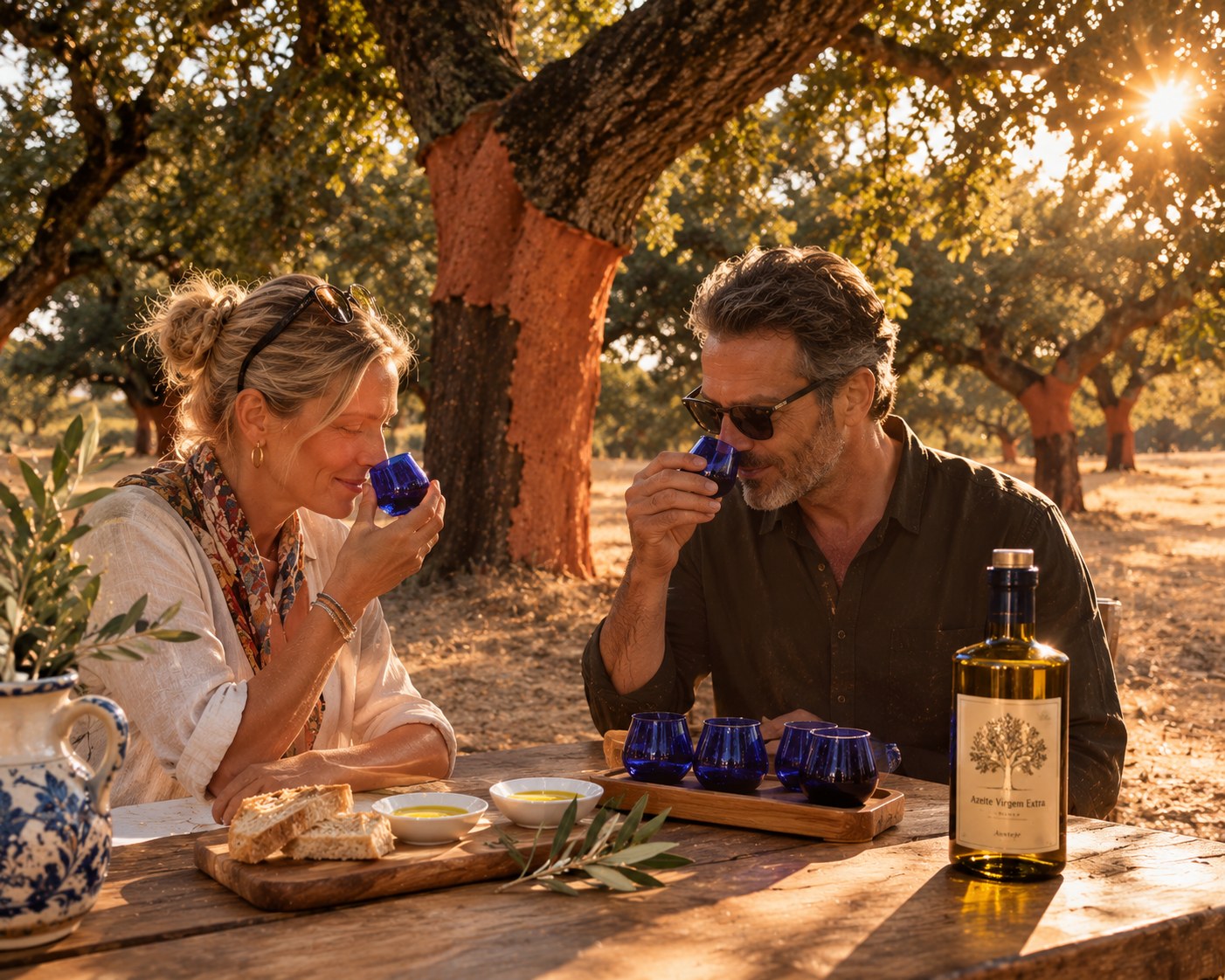
During Olive Oil at the Mill, a producer guides you through several oils, with bread, tomatoes and salt alongside. Notice the scent of cut grass, then the peppery sensation at the back of the throat. Let each oil register before moving to the next. The differences give substance to a landscape that, from the road, can seem like repeated rows of silver leaves.
A mill visit is not necessarily a chance to watch extraction in progress. Active work depends on olives arriving from the harvest. Keep that distinction clear: seeing the mill and learning its process can still be worthwhile when the machinery is quiet.
Cork, Wine and Olive Oil
Olive Oil at the Mill
Alentejo olive groves
Taste fresh olive oil beside the groves it came from.
January: a harvest tail, not a promise
January can belong to the closing stretch of the olive harvest, but it is not a promise of nets beneath every tree. Some groves are still being gathered; others have already finished. Ripeness, weather and the producer’s choices shape the work more closely than the calendar. A quiet grove does not mean you have missed the season’s oil.
Picking and tasting follow different rhythms. The harvest ends, while its oil remains at the table. Bread gives it a familiar setting, with room to notice grassy aromas and the pepper that follows a mouthful. A producer-guided comparison can shift attention from the activity outside to the differences between oils. There is no need for moving machinery to make that conversation meaningful.
For a January visit, make tasting the focus rather than assuming hands-on harvesting will be possible. If joining the pickers matters to you, establish whether the grove is still being harvested. Treat any remaining harvest as a seasonal possibility, and leave space for a slower encounter with the oil itself.
Following olive country through the Alentejo
Évora, in Alentejo Central, gives an olive-focused journey a setting beyond the grove. Inside its walls are lanes of whitewashed houses and the Roman temple. Beyond them, the countryside opens into cork oak woodland and farmland. Leave room for both: a walk through the old town, then time among the trees and at the table.
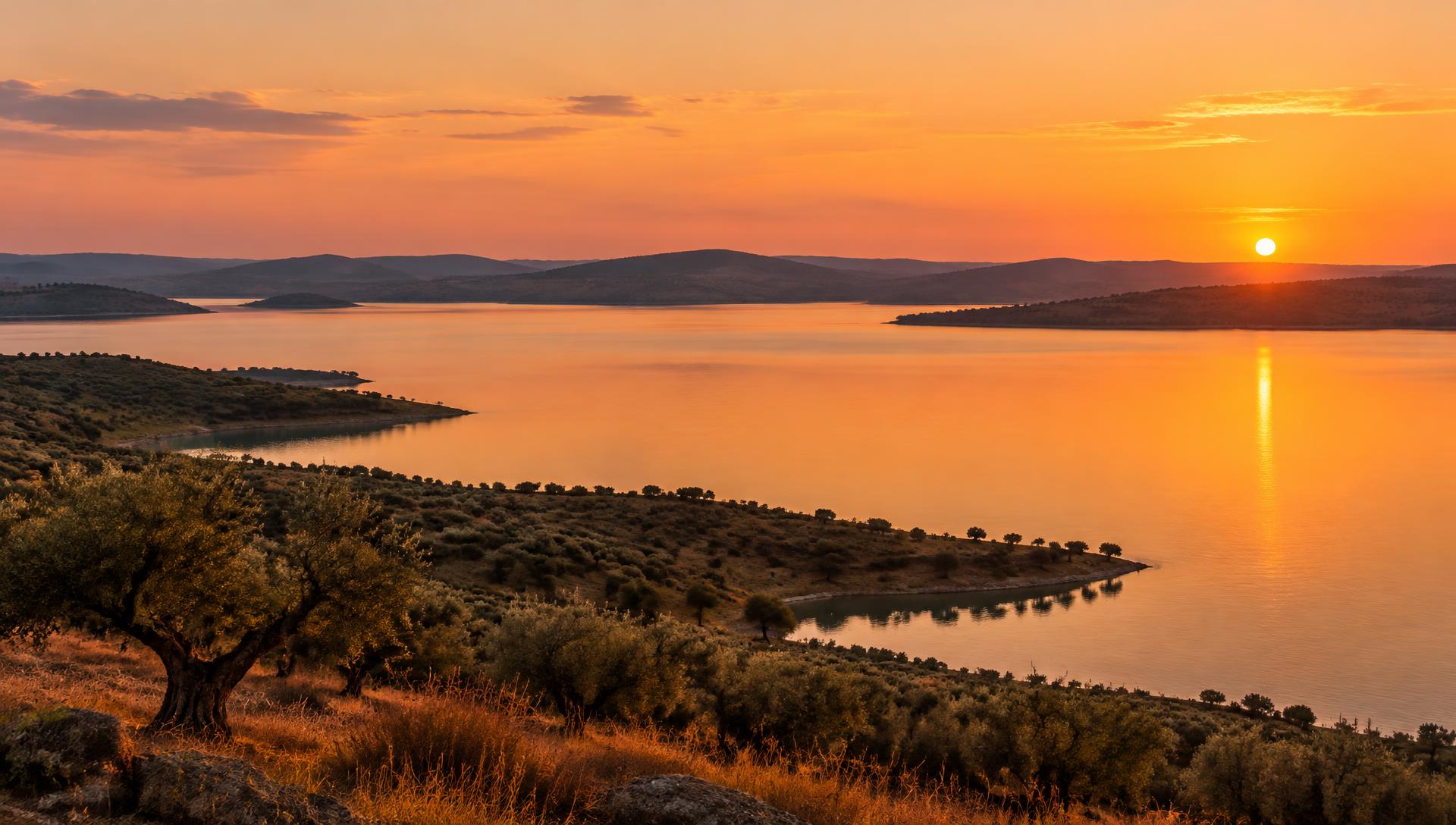
Farther south, Baixo Alentejo stretches across plains of wheat and silver-leaved olive groves. Beja, Serpa and Moura place you within this olive country. Serpa brings cheese into the story, while bread and olive oil connect the landscape to an everyday meal. These are places to explore without treating every grove as a visitor attraction.
A producer-guided mill visit gives that landscape a closer focus. Walk among old olive trees, learn how the oil is extracted, then compare oils with bread, tomatoes and salt. Notice the cut-grass aroma before the peppery sensation at the back of the throat. Bread gives the tasting a familiar anchor, linking what grows outside to what arrives on the table.
Let the harvest remain seasonal rather than certain. The season’s oil can still tell its story after the picking has ended.